
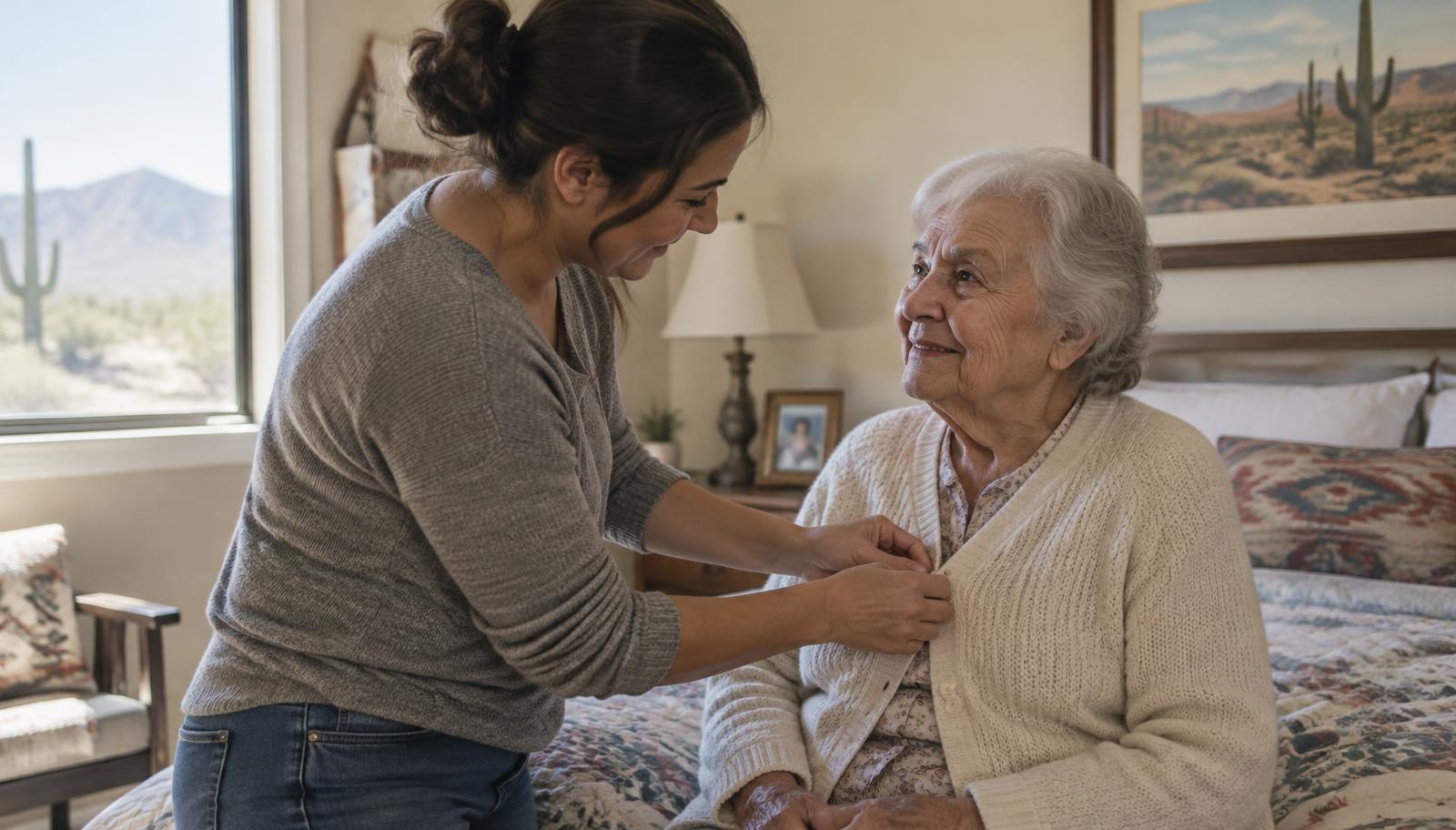
If you've started looking into care for a parent, spouse, or yourself, you've probably come across the term "ADLs." Short for Activities of Daily Living, ADLs are the basic self-care tasks most of us do every day without thinking about them. Understanding them can help you describe your loved one's needs, plan for care, and understand what programs like ALTCS may cover.
The core Activities of Daily Living
- ✓BathingWashing the body, getting in and out of the shower or tub safely, and basic hygiene.
- ✓DressingChoosing appropriate clothes and putting them on, including buttons, zippers, and shoes.
- ✓ToiletingGetting to and from the bathroom and managing personal care.
- ✓Transferring and mobilityMoving from a bed to a chair, standing up, and walking around the home.
- ✓ContinenceManaging bladder and bowel needs.
- ✓EatingGetting food from the plate to the mouth. (Cooking is considered a separate task, see below.)
What are IADLs?
Instrumental Activities of Daily Living (IADLs) are the more complex tasks that keep a household running. They include preparing meals, housekeeping, laundry, shopping, managing medications, using the phone, getting to appointments, and handling finances. Difficulty with IADLs is often the first sign that someone could use a little support.
Why ADLs matter when planning care
Care teams, health plans, and long-term care programs often look at how much help a person needs with ADLs to understand their level of need. In Arizona, the Arizona Long Term Care System (ALTCS) can cover in-home assistance with activities like bathing, dressing, and mobility for eligible members.
How non-medical home care helps
A non-medical caregiver can provide respectful, hands-on help with ADLs and IADLs while your loved one stays in the comfort of home. At Inspiration of the Valley, our caregivers support personal care, meals, light housekeeping, errands, and companionship, always with patience and dignity.
How to tell if a loved one needs help with ADLs
Needs usually show up gradually. You might notice a parent wearing the same outfit for days, avoiding the shower because getting in and out feels risky, or holding on to furniture while walking. Keep a simple log for a week or two: which tasks are hard, what time of day they are hardest, and whether anyone is already helping. That record makes conversations with family, doctors, and care providers much more productive.
ADLs, IADLs, and care planning
When a health plan or care team assesses someone, they often ask how much help is needed with each ADL: none, some, or full assistance. The answers help shape a care plan and the number of support hours. Being specific helps. Instead of "Mom needs help bathing," try "Mom needs someone nearby to steady her getting into the tub and help washing her back."
Simple ways to support independence at home
- ✓Set up the spaceClear walkways, add night lights, and keep everyday items within easy reach.
- ✓Break tasks into stepsLaying out clothes in order or prepping ingredients can let a person do more on their own.
- ✓Keep a routinePredictable times for meals, bathing, and rest reduce stress and confusion.
- ✓Ask for help earlyA few hours a week of support can prevent burnout and keep everyone safer.
Paying for help with ADLs in Arizona
For eligible members, ALTCS can cover in-home help with activities like bathing, dressing, and mobility. Families who don't qualify, or who want extra hours, can choose private pay home care. If a family member is already providing this care, they may be able to get paid for it. Learn more about our home care family caregiver jobs.
Need help with daily activities at home?
Our caregivers help with bathing, dressing, meals, and more, so your loved one can stay safely at home.