
When families first see a DDD service plan, the names of services can be confusing. Attendant care and habilitation in particular can sound similar, and both often happen at home. Knowing the difference helps you understand what to expect from caregivers and how to speak up for what your loved one needs.
Two services with different purposes
Arizona DDD recognizes both attendant care and habilitation as home and community based services. They may take place in familiar settings, but they meet different needs. Attendant care generally assists with essential daily activities, while habilitation is designed to help a person develop, improve, or maintain skills. DES lists these among its available DDD services and supports (opens in a new tab).
What is attendant care?
Attendant care helps an eligible member with tasks they cannot safely or consistently complete on their own. Depending on assessed needs and authorization, assistance may relate to bathing, dressing, grooming, eating, mobility, and other everyday routines. The exact tasks are guided by the individual's authorized plan, not simply by what a caregiver or agency offers. You can read more about attendant care with Inspiration of the Valley.
What is habilitation?
Habilitation uses planned support and instruction to build functional skills. That might mean practicing a daily routine, learning the steps of personal care, strengthening communication or social participation, or growing more independent at home and in the community. Goals should be individualized and meaningful to the person receiving services. Learn more about habilitation services.
An everyday example
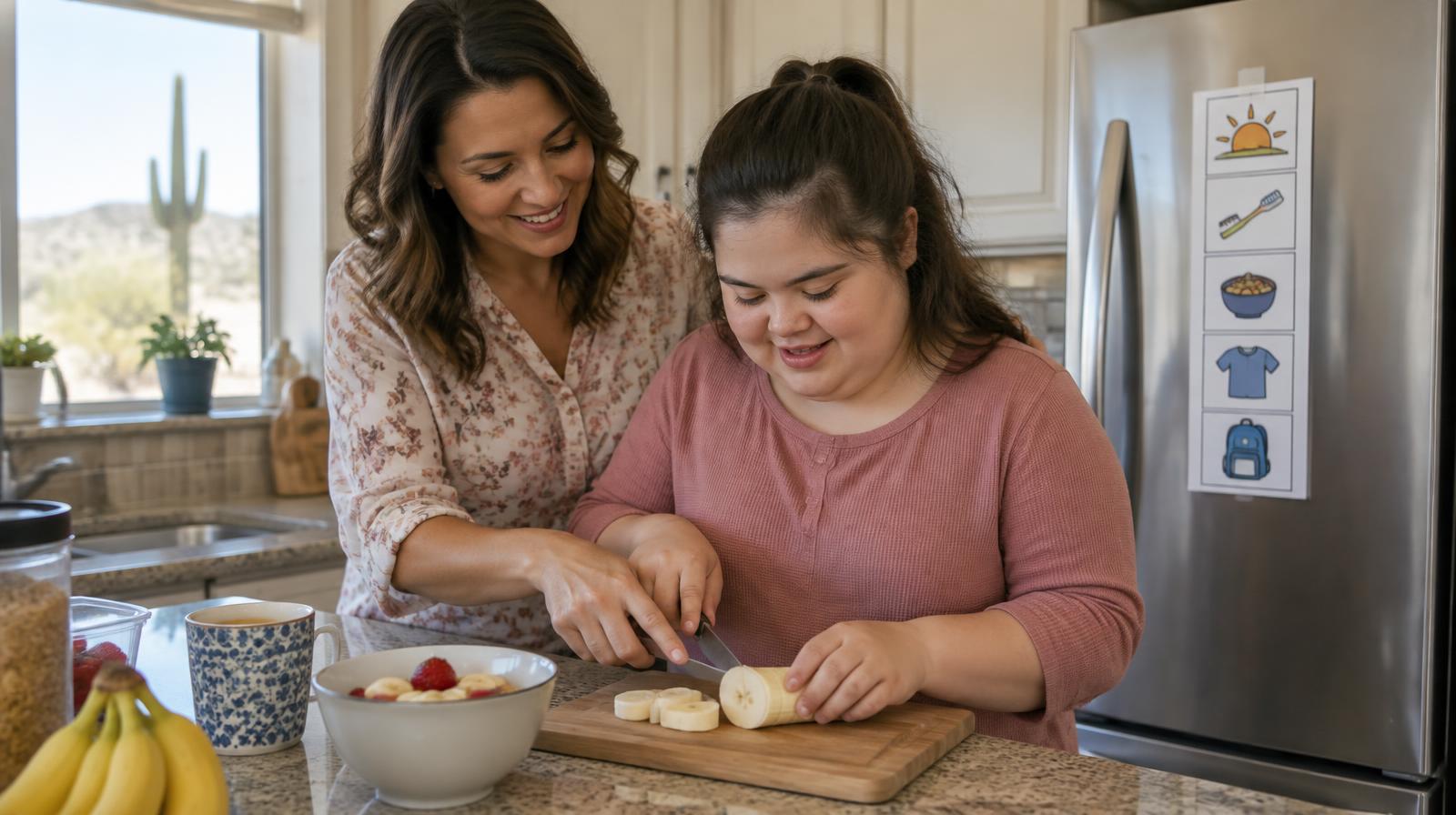
Picture someone who needs help getting ready in the morning. With attendant care, a caregiver might provide hands-on help with dressing and hygiene. With habilitation, a caregiver might guide structured practice: choosing clothing, following a picture schedule, or completing more of the routine independently each week. Actual tasks, and how they may be billed, depend on the approved service and plan.
Both approaches come from a place of care. One meets today's needs with dignity; the other gently builds toward more independence tomorrow.
Can someone receive both?
Some members have assessed needs that support more than one service type. That does not mean tasks can be billed twice or that services can overlap without authorization. DDD and the Support Coordinator determine the services and hours that fit the member's needs. Families should ask how each approved service is defined in their plan.
Questions families can ask
- ✓What outcome is this service meant to accomplish?
- ✓Which activities are authorized?
- ✓How will progress be discussed, and how often?
- ✓Who should we contact if needs change?
- ✓What happens if a caregiver is absent?
Your loved one's Support Coordinator is the right person to talk with about approved services and planning. Our guide on what a DDD Support Coordinator does includes tips for planning meetings.
Where respite fits in
Families sometimes ask about respite in the same conversation. Respite is different from both: it offers temporary relief for an unpaid caregiver. If you have been caring around the clock, respite may be worth asking about.
Frequently asked questions
Is habilitation just babysitting?
No. It has individualized skill-building purposes.
Is attendant care medical nursing?
No. Attendant care is distinct from skilled medical nursing services.
Who decides which service a member needs?
DDD coordinates assessment and authorization through its established processes.
Official sources and further reading
- ✓Arizona DES: Available DDD Services and Supports (opens in a new tab)Descriptions of support coordination and home and community based services.
- ✓Navigating the System: Guide for Members and Families (opens in a new tab)A DES handbook with a full chapter on services.
Wondering what support could look like at home?
We're happy to explain how attendant care, habilitation, and respite work with our caregivers, and answer any questions about your loved one's plan. DDD determines eligibility and authorizes covered services. Reaching out to us is simply a conversation; it does not guarantee enrollment, authorization, or service availability.